
Heatwaves and Senior Safety: Why Elderly Individuals Living Alone Require Special Attention

The heatwave in Europe and Poland shows that high temperatures are becoming an increasingly serious health threat, especially for the elderly. WHO Europe describes heat as a “silent killer” and indicates that over the last four years in Europe, more than 200,000 people have died from causes related to high temperatures. The scale of the threat has also become highly visible in Poland. According to operational and telemetric data from IMGW-PIB, on June 28, 2026, Słubice recorded 40.5°C and Toruń recorded 40.3°C, breaking the historical record of 40.2°C from 1921.
In such conditions, seniors living alone require special attention. Dehydration, overheating, weakness, or confusion can develop gradually, and an elderly person is not always able to ask for help on their own. Therefore, during heatwaves, it is worth regularly checking if everything is alright and knowing the signs that may require a quick response.
Why Are Heatwaves Particularly Dangerous for Seniors?
Older adults are more vulnerable to health problems associated with high temperatures. According to the CDC, people over 65 adapt less effectively to sudden changes in temperature and are more susceptible to heat-related illnesses. The CDC also indicates that caregivers should pay special attention to cooling the body and keeping elderly individuals hydrated during hot days.
The WHO notes that extreme heat increases the risk of heat exhaustion and heatstroke, while also putting a strain on the heart and kidneys. It can worsen the course of cardiovascular diseases, respiratory diseases, diabetes, and other chronic conditions. The Government Security Centre emphasizes that during heatwaves, one should, among other things, stay hydrated, drink plenty of water (preferably still), avoid alcohol, wear light clothing, and limit the influx of hot air into rooms.
Dehydration: A Problem a Senior Might Not Notice
During heatwaves, the body loses water more quickly. For seniors, this problem is particularly serious because their sense of thirst may be diminished, and some elderly people intentionally drink less—for example, out of fear of using the restroom too frequently.
Warning signs may include:
- weakness,
- drowsiness,
- dizziness,
- headache,
- dry mouth,
- darker urine color,
- reduced urination,
- confusion,
- difficulty concentrating,
- unusual behavior.
The NFZ recommends drinking systematically during heatwaves, preferably water, and avoiding alcohol. It also points out that on hot days, it is important to remember to drink water regularly—for example, a glass every hour—and to avoid beverages that can cause further dehydration.
Important: People with heart failure, kidney disease, or those taking diuretics should consult their doctor regarding their fluid intake. For some patients, hydration recommendations must be individualized.
Heatstroke: When to Act Immediately?
Heatstroke is a life-threatening condition. The NFZ lists symptoms including high body temperature, headache and dizziness, nausea, vomiting, mood changes, visual disturbances, rapid heartbeat, rapid breathing, and loss of consciousness.
If the person’s condition does not return to normal quickly, an ambulance should be called at 999 or 112. The following are particularly alarming:
- loss of consciousness,
- severe confusion,
- difficulty speaking,
- very high body temperature,
- rapid breathing,
- a very fast heartbeat,
- seizures,
- lack of improvement after cooling and fluid administration.
In such a situation, you should not wait for it to “pass” – you must act immediately.
A Senior Alone at Home: What Should the Family Watch Out For?
During heatwaves, it is not just the symptoms reported by the senior that can be concerning, but also changes in their daily behavior. It is worth paying attention if the senior:
- does not answer the phone at the usual time,
- does not leave their room for a long time,
- does not use the kitchen or bathroom as usual,
- is exceptionally drowsy or apathetic,
- speaks more slowly or appears confused,
- complains of dizziness, nausea, or weakness,
- had an episode of fainting or a fall,
- stays in a very overheated apartment,
- does not drink water regularly,
- does not have access to a cooler room.
The CDC recommends that caregivers regularly check during heatwaves to ensure that the elderly person is drinking enough water, has access to a cool place, and is not showing signs of heat-related issues.
How to Safely Support a Senior During Heatwaves?
The foundation relies on simple, regular prevention. It is worth ensuring that the senior:
- drinks water regularly, in small portions,
- always has water within reach,
- eats light meals,
- avoids alcohol,
- limits going out during the hottest hours,
- covers windows during the day,
- airs out the apartment when the outside temperature is lower,
- stays in the coolest room,
- wears light, breathable clothing,
- does not engage in heavy physical exertion,
- has a planned contact with family, a neighbor, or a caregiver.
The Government Security Centre recommends, among other things, drinking plenty of water, avoiding alcohol, wearing light and breathable clothing, and closing windows and blinds during the day to limit the influx of hot air into the room.
During very high temperatures, one must also be careful with fans. The WHO and public health experts point out that during extreme heat, a fan alone is not always enough as the primary source of cooling, especially if the person is dehydrated or staying in a very overheated room. In such conditions, actual cooling of the body and surroundings is more important: a cool room, shade, hydration, cold compresses, a shower, or contacting medical help in case of warning symptoms.
Why Just Saying “Call Me if Something Happens” Might Not Be Enough?
In the case of seniors living alone, the most difficult problem is that the person in need of help is not always able to ask for it. They may be too weak, they may faint, become confused, not have a phone at hand, or fail to press an emergency button. They might also assume “it’s nothing serious,” even though their condition is worsening.
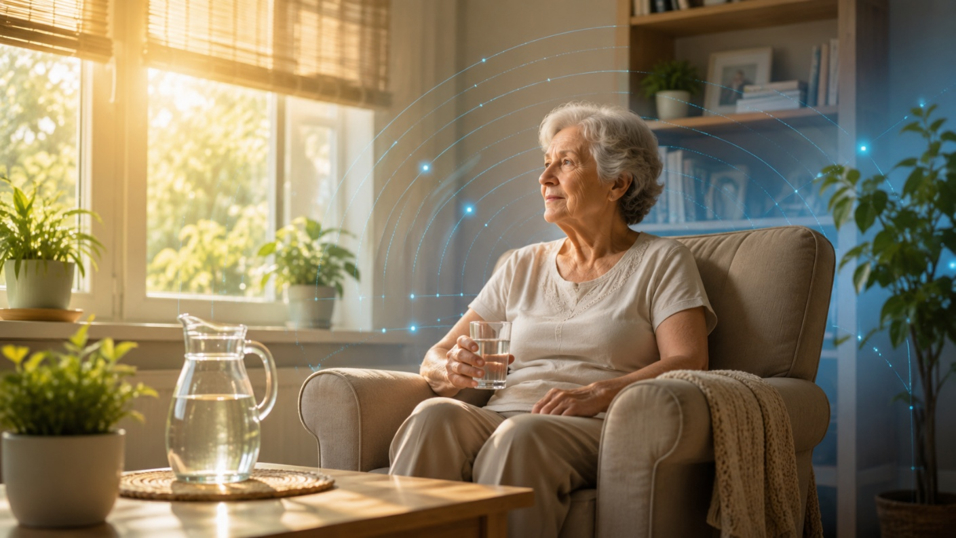
Therefore, during heatwaves, solutions that do not require active operation from the senior are particularly important. Regular contact from family, caregiver visits, neighborly help, and a clear response plan are fundamental. Technology can be an additional support—especially when it helps notice worrying changes in daily activity.
The Role of Camera-Free Technology
In many homes and care facilities, a camera in a senior’s room is a difficult solution to accept. It affects privacy, dignity, and a sense of security. On the other hand, the family or staff want to know if the elderly person is active, or if there has been a prolonged period of immobility, a fall, or another situation requiring verification.
Therefore, the importance of technologies that can support care without the use of cameras and without the need to wear wristbands is growing. Contactless monitoring can help detect unusual patterns, such as a prolonged lack of movement, unusual nighttime activity, a potential fall, or a lack of presence in typical areas of the apartment. Such solutions do not replace a caregiver, doctor, or emergency procedures. However, they can shorten the time it takes to notice a problem and help the family or staff quickly make a decision to check on the situation.
Key Takeaway
Heatwaves are a real threat to seniors. The greatest risk is that health deterioration can develop silently: through dehydration, weakness, drowsiness, confusion, or prolonged immobility. Therefore, during high temperatures, it is crucial to act in advance: regularly contact the senior, ensure hydration, a cooler room, reduced exertion, and a quick response plan. For those living alone, it is also worth considering additional forms of monitoring that do not invade privacy but help notice more quickly that something might be wrong.
Useful Sources and Guides
- World Meteorological Organization: information on the record heatwave in Europe
- WHO Europe: statement on the health impact of heatwaves and the number of heat-related deaths
- PAP / IMGW: information about 40.5°C in Słubice and 40.3°C in Toruń according to operational data
- Government Security Centre: “Stay safe during heatwaves” guide
- National Health Fund: information on heatstroke, dehydration, and first aid
- CDC: recommendations for protecting older adults during heatwaves
This article is for educational purposes only and does not replace medical consultation. In the event of a sudden deterioration in health, loss of consciousness, severe confusion, or suspected heatstroke, call for help immediately at 112 or 999.